A brown leaf is not a diagnosis. On Fairfield properties, ornamental plants can show similar symptoms from fungal disease, insects, drought stress, winter injury, poor drainage, salt exposure, or a planting site that no longer suits a mature shrub or tree. This ornamental plant disease identification guide helps homeowners separate common warning signs from conditions that need professional attention before a localized issue affects the appearance and health of the landscape.
Start With the Pattern, Not the Plant Name
The most useful first question is not, “What disease is this?” It is, “Where and how is the damage appearing?” Diseases tend to follow recognizable patterns. Looking at the whole plant, then moving closer, provides far better information than inspecting one damaged leaf.
Check whether symptoms begin on older, lower leaves or new growth. Look for damage that is isolated to one branch, spread evenly across the plant, or concentrated on the side facing a lawn sprinkler, driveway, or prevailing wind. Also note when symptoms began. A problem that appears after a week of humid weather is different from foliage that has slowly faded since midsummer.
Take clear photos before pruning or treating. Include a full-plant view, a close-up of leaves or stems, and an image of the soil around the base. These details help a certified plant health care professional distinguish disease from environmental stress.
Common Symptoms and What They May Mean
Leaf spots, blotches, and early leaf drop
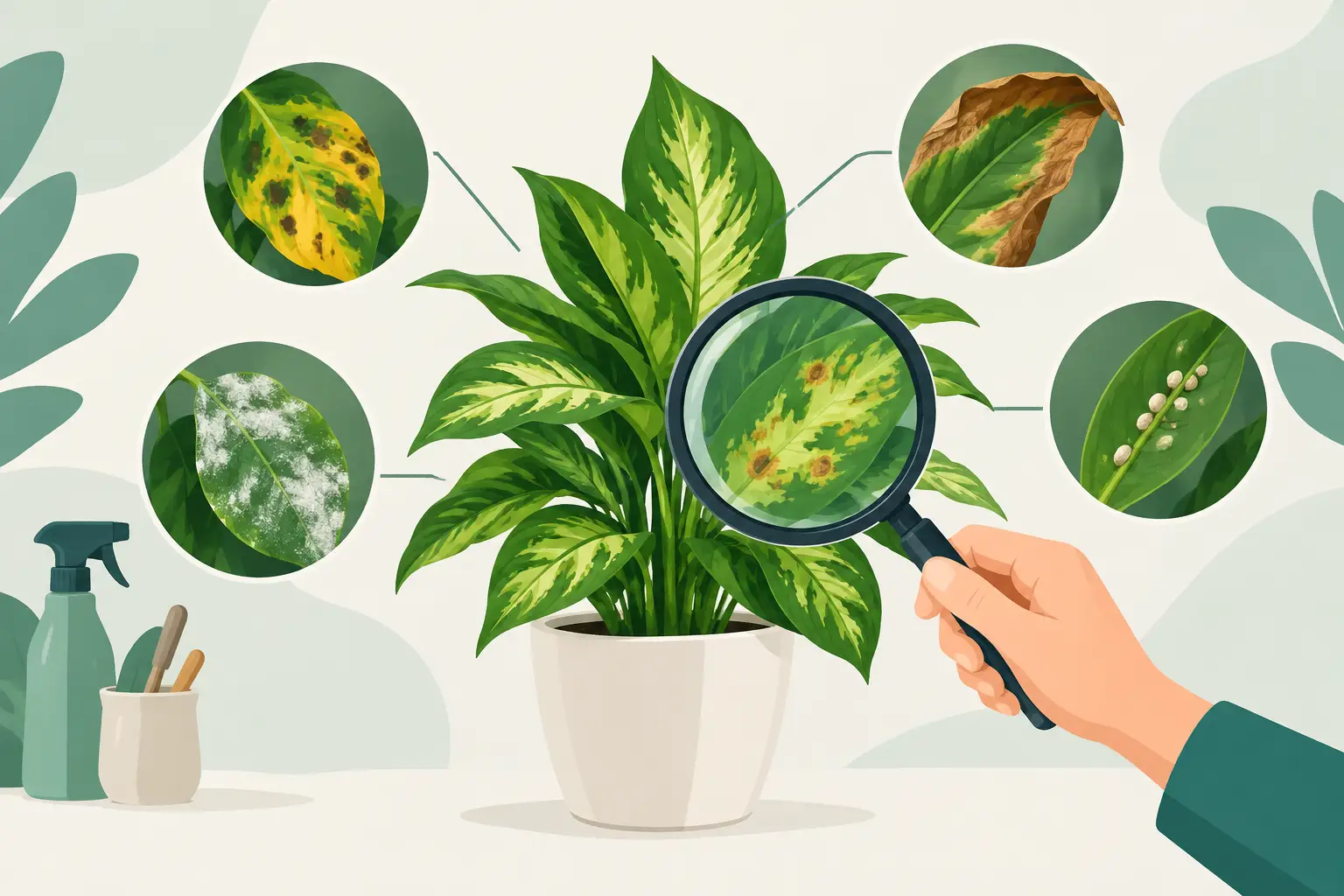
Round or irregular brown, black, purple, or tan spots often point to a leaf spot disease. Some spots have darker borders, lighter centers, or tiny black fruiting bodies. On flowering dogwoods, crabapples, roses, hydrangeas, and certain maples, leaf diseases can become more noticeable during wet springs and humid summers.
The key distinction is the pattern. Disease spots are often scattered across the leaf and may merge into larger dead areas. If affected leaves yellow and drop early, the plant can lose vigor over repeated seasons. One season of leaf spot is not always an emergency, but recurring defoliation deserves a management plan.
Avoid wetting foliage late in the day, remove heavily infected fallen leaves when practical, and do not compost diseased material unless your compost system reaches reliably high temperatures. Fungicide timing may be appropriate for valuable plants with a known recurring issue, but it works best preventively or at the earliest stage of infection. Spraying after extensive damage is visible may protect new growth, but it will not repair damaged leaves.
Powdery white or gray growth
A dusty white or pale gray coating on leaves, stems, or flower buds is commonly powdery mildew. Unlike many leaf diseases, powdery mildew does not require standing water on foliage. It often develops where plants are crowded, air movement is limited, or a susceptible variety receives the wrong balance of sun and shade.
Lilacs, phlox, bee balm, roses, ninebark, and some dogwoods can be affected. Leaves may curl or become distorted, and flower production can decline. Improve air circulation through selective pruning and avoid excessive nitrogen that produces soft, highly susceptible growth. The right answer depends on the plant: a lilac with mild late-season mildew may need cultural adjustments, while repeated severe mildew on a specimen shrub may justify targeted treatment and a review of site conditions.
Blackened shoots or branch tips
When new shoots suddenly turn brown or black and appear scorched, look closely at the transition between healthy and dead tissue. Fire blight, a bacterial disease, can cause this characteristic “burned” appearance on certain members of the rose family, including pears, crabapples, cotoneaster, and some hawthorns. Curved shoot tips are another possible sign.
Pruning can help reduce active infections, but timing and sanitation matter. Cut well below visible symptoms with disinfected tools, and avoid heavy fertilization that encourages vulnerable new growth. Because bacterial diseases can be confused with frost injury or drought stress, confirmation is worthwhile before taking major action.
Wilting, yellowing, and dieback from the bottom up
Wilting is one of the most misunderstood ornamental symptoms. Homeowners often add water immediately, yet wilt can result from both dry soil and roots sitting in saturated soil. Root diseases, compacted soil, buried root flares, construction damage, and poor drainage can all prevent roots from moving water to the canopy.
Before watering, check the soil several inches below the surface. If it is dry and crumbly, drought stress is possible. If it is wet, sour-smelling, or compacted, adding more water can worsen the problem. Plants affected by root rot may show yellowing leaves, reduced growth, sparse canopies, and progressive branch dieback.
This is especially relevant for azaleas, rhododendrons, boxwoods, yews, and other ornamentals that are sensitive to poorly drained conditions. Root-zone diagnosis may include checking mulch depth, soil grade, irrigation patterns, trunk flare exposure, and the condition of roots. A chemical treatment alone cannot correct a drainage problem.
Cankers and sunken areas on stems
A canker is a dead, damaged section of bark that may appear sunken, cracked, discolored, or swollen around its edges. Canker diseases can girdle stems and branches, causing foliage beyond the affected area to wilt or die. Stress often makes plants more vulnerable, particularly after drought, winter damage, mechanical injury, or improper pruning.
On boxwoods, pachysandra, dogwoods, and many woody ornamentals, stem disease can be mistaken for general decline. Inspect the base of dying branches and compare them with healthy stems. If the damage is limited, timely pruning may preserve the plant. If cankers are widespread on main stems or at the crown, replacement and site correction may be more realistic than repeated treatment.
Disease, Insects, and Weather Damage Can Look Alike
Not every hole, brown edge, or yellow leaf is a disease. Japanese beetles and caterpillars chew tissue. Spider mites create stippling or bronzing, often during hot, dry weather. Scale insects may appear as small bumps on twigs and can lead to sticky honeydew or black sooty mold. Deer browsing leaves torn stems and missing buds rather than the defined lesions associated with many foliar diseases.
Weather also leaves clues. Winter burn on broadleaf evergreens commonly affects exposed foliage after cold, windy conditions. Salt injury may concentrate on plants near roads, walkways, or driveways. Drought stress frequently begins at leaf margins, while nutrient deficiencies can produce more uniform color changes or distinctive yellowing between leaf veins.
Accurate identification matters because the wrong treatment wastes time and can create additional stress. Fungicides do not control insects. Insecticides do not solve drainage. Fertilizer cannot cure a fungal leaf spot and may encourage weak growth if applied when a plant is already struggling.
A Practical Ornamental Plant Disease Identification Checklist
When you notice a problem, document the plant species or variety if known, when symptoms first appeared, recent weather, irrigation practices, and any recent pruning, construction, or lawn applications. Then inspect both sides of several leaves, the stems, and the soil at the root zone.
Use this sequence before deciding on treatment:
- Determine whether the issue is spreading or limited to older damage.
- Look for signs of pests, including webbing, chewing, eggs, insects, or sticky residue.
- Check soil moisture below the mulch instead of judging by the surface alone.
- Identify site stressors such as crowding, poor drainage, lawn sprinkler overspray, reflected heat, or deer pressure.
- Compare symptoms on nearby plants of the same type.
Remove only clearly dead or heavily diseased material unless a professional recommends more extensive pruning. Do not prune aggressively during periods of heat or drought. Keep mulch two to three inches deep and pulled back from trunks and stems so moisture is moderated without trapping moisture against bark.
When to Call a Plant Health Care Professional
Prompt diagnosis is particularly valuable when mature trees or high-value shrubs show widespread dieback, when a plant declines quickly, or when symptoms recur each season despite reasonable care. It is also wise to call for help when a problem involves multiple species, follows excavation or drainage changes, or affects plants near a home, patio, or frequently used outdoor area.
A professional assessment considers the plant, pest or pathogen, soil, weather history, maintenance practices, and treatment timing together. That approach can include pruning, sanitation, irrigation adjustments, soil and root-zone care, deer management, or targeted organic and conventional treatment options based on the actual need. O Care LLC uses this site-specific perspective to help Fairfield homeowners protect the ornamental plants that shape their property year after year.
Healthy ornamentals rarely come from a single product or one-time fix. Regular observation, sound planting conditions, and early expert guidance give shrubs and trees the best chance to recover while keeping your landscape attractive through every season.