Healthy trees add shade, beauty, privacy, and value to a property. However, trees can develop problems long before serious damage becomes visible. Discolored leaves, dead branches, unusual growth, cracks, and changes in bark can all signal stress. An Expert Tree Health Evaluation in Stratford, CT can help identify these warning signs before a small issue becomes a major tree health or safety concern. This guide explains the most common symptoms to watch for, what can cause them, and how professional evaluation can help homeowners make informed decisions about tree care.
Common Warning Signs of Poor Tree Health
Trees communicate stress through visible changes. A homeowner does not need to be an arborist to notice that something looks different. Regular observation can help identify potential problems early.
One of the most common signs is abnormal foliage. Leaves may turn yellow, brown, or pale outside of their normal seasonal pattern. Premature leaf loss can also indicate environmental stress, disease, pests, or root problems.
Dead branches deserve attention as well. A few dead twigs can occur naturally, but larger dead limbs may indicate declining health. In addition, dead wood can become a falling hazard during storms or high winds.
Other warning signs include:
- Cracked or peeling bark
- Holes or tunnels caused by insects
- Mushrooms growing near the trunk or roots
- Sparse or thinning foliage
- Multiple dead branches
- Weak or abnormal new growth
- Trunk cavities
- Leaning or unstable trees
- Exposed or damaged roots
Not every symptom means a tree must be removed. In many cases, proper care can address the underlying problem. The key is determining what is actually causing the change.
How an Expert Tree Health Evaluation in Stratford, CT Identifies Problems
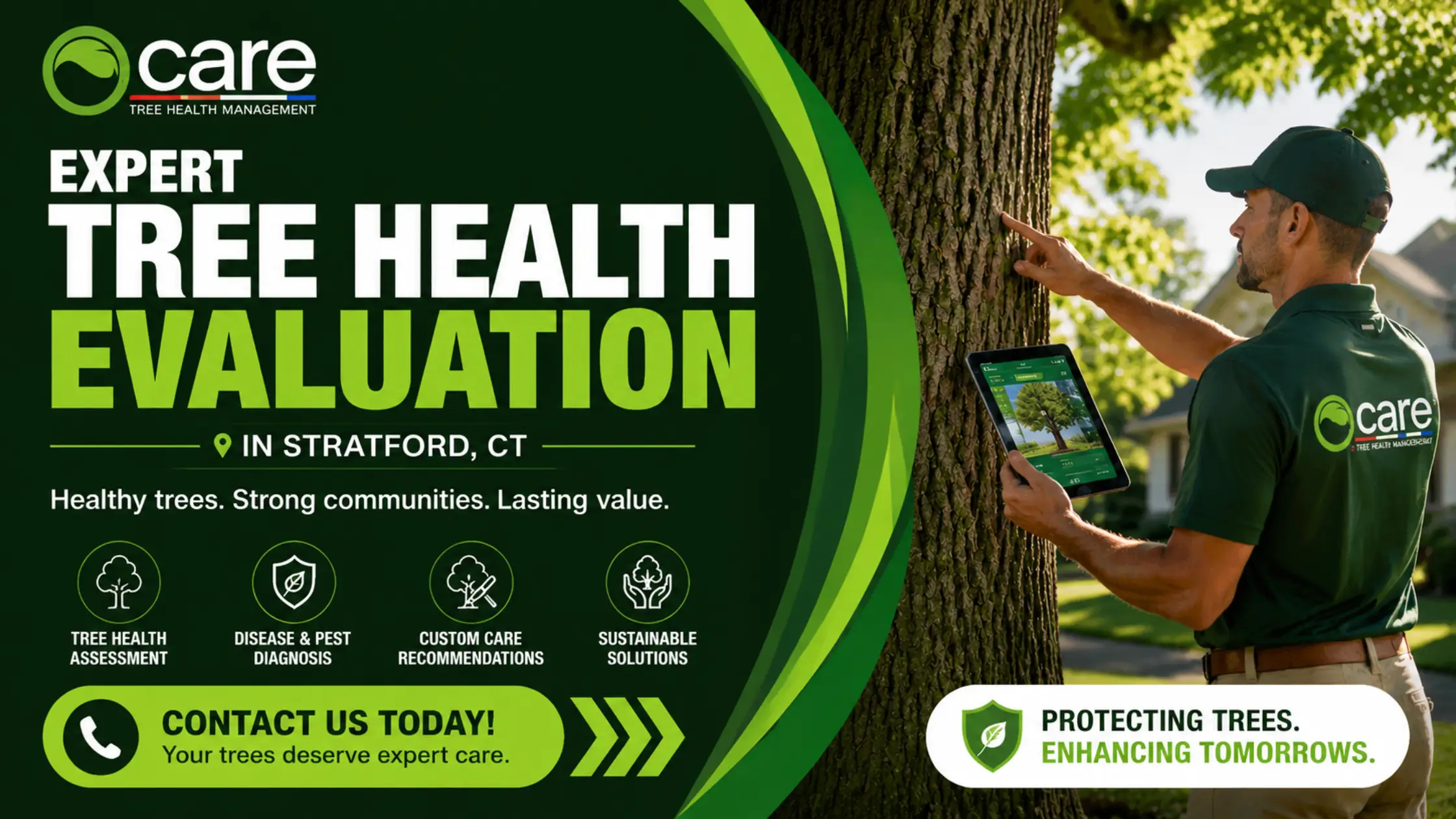
A professional tree assessment looks beyond surface symptoms. An experienced tree care professional examines the tree’s overall condition, structure, environment, and signs of stress.
The evaluation may begin with the crown, where professionals look at leaf density, deadwood, branch structure, and abnormal growth. Next, the trunk receives close attention for cracks, cavities, wounds, decay, and signs of insect activity.
The root zone also matters. Roots provide water and nutrients while anchoring the tree. Construction activity, soil compaction, drainage problems, grade changes, and root damage can all affect tree stability and health.
Location plays an important role, too. A tree growing near a house, driveway, sidewalk, utility line, or play area may require additional attention because structural problems can create greater consequences.
A professional evaluation helps connect these observations. Instead of treating one symptom in isolation, the assessment considers the tree as a complete living system.
Tree Diseases, Pests, and Environmental Stress
Tree health problems can have several causes, and identifying the cause is essential before selecting a treatment.
Fungal and bacterial diseases can affect leaves, branches, bark, and roots. Some problems appear as spots or discoloration on leaves. Others can cause cankers, dieback, decay, or abnormal growth.
Insects can create another set of challenges. Certain pests feed on foliage, while others damage bark or tunnel into wood. Heavy infestations can weaken a tree over time.
Environmental stress is often overlooked. Trees may struggle because of drought, excessive moisture, poor drainage, soil compaction, construction damage, or limited growing space.
Weather can add another layer of stress. Strong winds, heavy snow, ice, and severe storms may break branches or damage roots. Even when a tree remains standing, structural damage can create problems that appear later.
An Expert Tree Health Evaluation in Stratford, CT helps determine whether a symptom is linked to disease, insects, environmental conditions, structural weakness, or a combination of factors. That distinction matters because the right solution depends on the cause.
Solutions That Can Help Restore Tree Health
Once a tree problem has been identified, the next step is choosing an appropriate response. Treatment should match the condition of the tree rather than follow a standard formula.
Pruning is one common solution. Proper pruning can remove dead, damaged, or poorly positioned branches. It can also improve structure and reduce the weight carried by certain limbs. However, excessive pruning can cause additional stress, so cuts should be planned carefully.
Soil and root-zone care may also help. Improving soil conditions, addressing drainage issues, reducing compaction, and protecting exposed roots can support long-term growth.
Pest or disease management may be appropriate when a specific problem has been confirmed. Treatment decisions should consider the tree species, severity of the issue, surrounding landscape, and timing.
In some situations, removal may be the safest option. A severely decayed, structurally unstable, or declining tree can pose a significant risk, particularly when located near structures or areas with regular foot traffic.
The goal should not be removal whenever a problem appears. Instead, the goal is to protect healthy trees when practical and recommend removal when safety or long-term viability requires it.
Why Choose O Care LLC for Tree Health Services
Choosing a tree care provider requires more than finding someone who can cut branches. Tree health work involves observation, knowledge of tree structure, understanding of local growing conditions, and careful decision-making.
O Care LLC provides homeowners with a practical approach to tree care. Experience matters because different tree species and site conditions can produce similar symptoms for very different reasons.
Local knowledge is also useful in Stratford, CT. Coastal weather, seasonal changes, soil conditions, storms, and property layouts can all influence tree health. A local professional can consider these factors when evaluating a tree and recommending appropriate care.
Homeowners can benefit from professional service through:
- Careful inspection of visible tree conditions
- Identification of potential health concerns
- Assessment of structural risks
- Practical recommendations based on observed conditions
- Attention to surrounding property and safety
- Guidance on maintenance and future monitoring
- Clear communication about available options
Trust is especially important when tree removal or significant pruning may involve a substantial expense. A responsible professional should explain what was found, why a recommendation was made, and whether less invasive options are available.
An Expert Tree Health Evaluation in Stratford, CT gives homeowners useful information before committing to major tree work. That knowledge can make tree care decisions more confident and practical.
When Stratford Homeowners Should Schedule Expert Tree Health Evaluation
Not every tree needs frequent professional inspection. However, certain situations deserve prompt attention.
Consider scheduling an assessment after a major storm, especially if large branches have broken or the tree has developed a noticeable lean. A tree can sustain structural damage without falling immediately.
New symptoms also warrant attention. If leaves suddenly change color, branches begin dying, bark starts separating, or mushrooms appear around the base, professional evaluation can help determine the cause.
Older trees may benefit from periodic assessments as well. Age alone does not mean a tree is unsafe, but mature trees can develop structural issues that require closer observation.
An evaluation can be particularly useful before starting construction or major landscaping work. Excavation, grading, soil changes, and heavy equipment can damage roots. Planning tree protection before work begins can reduce avoidable damage.
Homeowners should also pay attention to trees located close to homes, garages, driveways, sidewalks, or other frequently used areas. A structural defect in such a location may create greater safety concerns than the same defect in an open part of the yard.
Early attention often provides more options. Once decay, root damage, or structural weakness becomes severe, treatment choices may become limited.
Expert Tree Health Evaluation With Informed Care
Healthy trees require more than occasional trimming. Regular observation, appropriate pruning, suitable growing conditions, and timely professional assessments can all support long-term tree health.
Homeowners in Stratford should take visible warning signs seriously, but a concerning symptom does not automatically mean a tree must be removed. A professional assessment can distinguish between manageable health issues and conditions that present a genuine safety risk.
When you notice declining foliage, deadwood, bark damage, unusual growth, or structural changes, an Expert Tree Health Evaluation in Stratford, CT can provide a clearer picture of what is happening and what steps make sense next.
O Care LLC can help property owners evaluate tree conditions and understand practical care options. With experienced service, local awareness, and a focus on responsible recommendations, homeowners can make better decisions about maintaining valuable trees and protecting the surrounding property.