
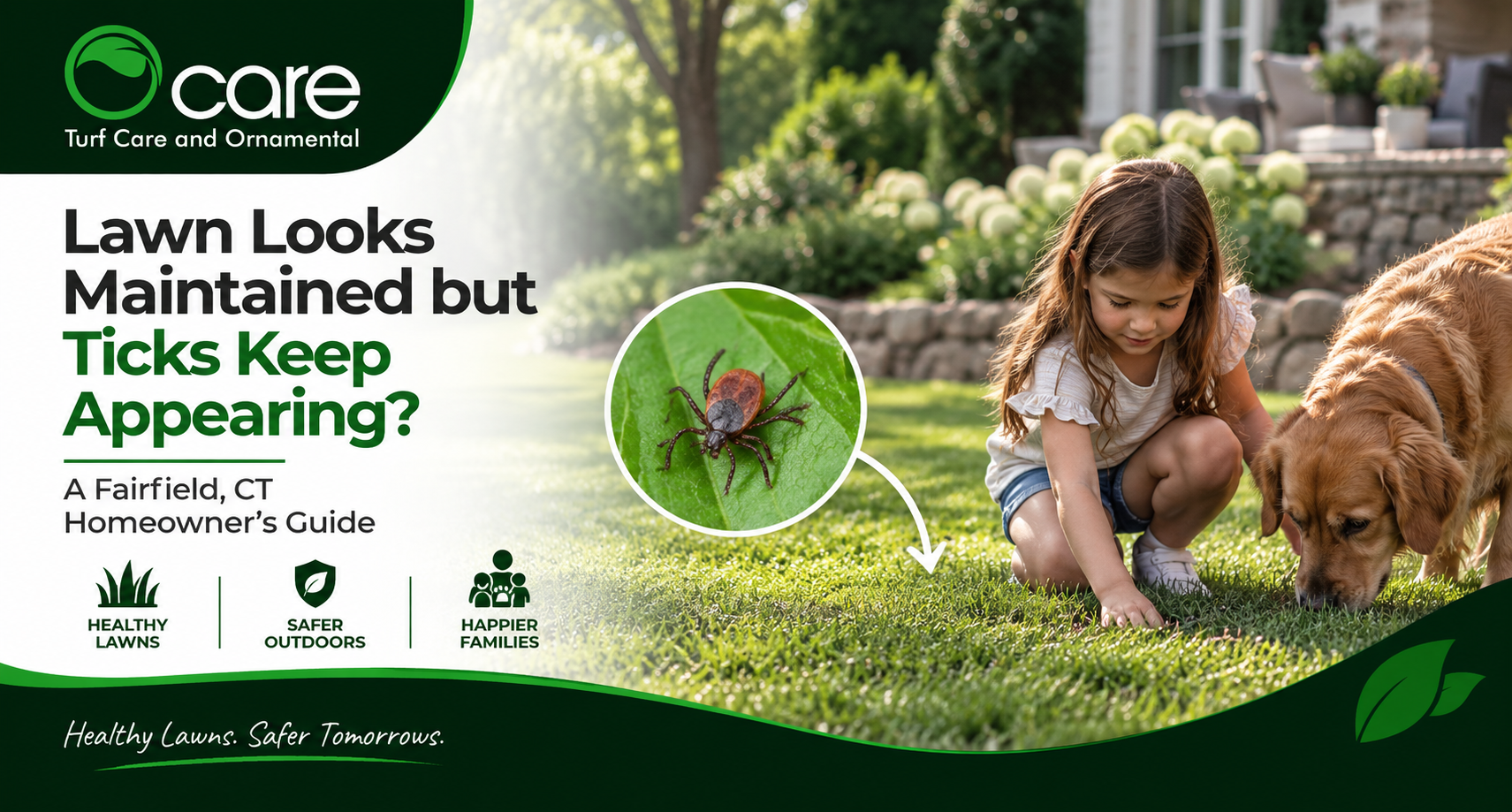
A freshly mowed lawn, trimmed shrubs, and clean landscaping can make a property look healthy and well cared for. But what happens when ticks still keep appearing in the yard? For many Fairfield, CT homeowners, this can be frustrating. It may seem that regular lawn maintenance should be enough to keep ticks away, but tick activity depends on much more than how neat the grass looks.
Ticks often prefer areas that provide moisture, shade, vegetation, and access to wildlife. This means a well-maintained lawn can still have areas around its edges that create suitable conditions for ticks. Understanding where these areas are and why ticks use them can help homeowners take a more complete approach to their outdoor spaces.
A Neat Lawn Is Only Part of the Property
Regular mowing is important for general lawn care, but ticks are not necessarily concentrated in the middle of a sunny, closely maintained lawn. They may be found around shaded edges, shrubs, wooded sections, leaf litter, and other protected areas.
This is why companies such as O Care LLC look at lawn and landscape care as more than simply cutting grass. Different areas of a property can have different conditions, and those conditions can influence both plant health and tick activity.
When ticks continue appearing, it helps to examine the entire yard rather than focusing only on the open lawn.
Pay Attention to the Edges of Your Yard
The transition between a maintained lawn and a wooded or heavily landscaped area deserves particular attention. These locations can offer more shade and moisture than the center of the lawn.
Leaves may collect underneath shrubs, along fences, beside stone walls, or at the edge of wooded areas. These spaces are easy to overlook during normal mowing.
Walk around the property and notice where the environment changes. Is one edge heavily shaded? Are there piles of leaves behind shrubs? Does vegetation grow densely along the property line? Identifying these areas can provide useful information about where ticks may be more likely to find favorable conditions.
Shade and Moisture Can Make a Difference
A backyard rarely receives equal sunlight everywhere. One section may stay sunny and dry while another remains shaded for most of the day.
Moisture also behaves differently across a property. Low spots, dense planting beds, and areas beneath mature trees may remain damp longer after rainfall.
Homeowners considering Organic tick control services near Fairfield CT should understand why property conditions matter. Tick management is not simply about treating every square foot in exactly the same way. Evaluating areas where ticks are more likely to encounter suitable habitat can help create a more targeted approach.
Wildlife May Be Visiting Without You Noticing
Another factor is wildlife movement. Deer, rodents, and other animals may regularly travel through a property even when homeowners rarely see them.
A yard located near woods or natural areas can become part of an animal’s regular route. Openings between properties, landscape borders, and areas behind shrubs can all provide pathways.
This does not mean that seeing wildlife automatically means a yard has a tick problem. However, animal activity is one factor worth considering when ticks repeatedly appear despite regular lawn maintenance.
Look for signs such as repeated tracks, disturbed vegetation, or areas where animals commonly enter and leave the property.
Don’t Forget Leaves and Dense Landscaping
Leaves are obvious when they cover the middle of the lawn, but smaller accumulations are easier to miss.
Check underneath decks, around sheds, behind shrubs, beside fences, and near wooded borders. Organic material can collect in these areas even when the visible lawn looks spotless.
Dense shrubs can create another overlooked environment. When vegetation becomes crowded, airflow and sunlight near the ground may be reduced. Maintaining landscaping therefore involves paying attention to what is happening underneath and between plants, not only how they look from the street.
Lawn Maintenance Still Plays an Important Role
None of this means regular lawn care is unimportant. Consistent mowing, removing excessive leaves, managing weeds, trimming vegetation, and maintaining planting areas can all help keep a property more manageable.
People searching for a Lawn maintenance company near me Easton may be thinking mainly about appearance, but regular maintenance also provides opportunities to notice changes around the property. Overgrown edges, thinning grass, excessive leaf accumulation, or areas holding moisture can be identified before they become bigger concerns.
The key is to think beyond appearance. A lawn can look attractive while certain corners of the property still need attention.
Think About Where Your Family Actually Spends Time
Not every part of a yard receives the same amount of activity.
Children may play near the tree line. Pets may follow the same path around shrubs every day. A seating area might be located beside dense landscaping, while a garden could sit near the wooded edge.
When evaluating tick concerns, consider these frequently used areas. Understanding where people and pets spend time can help homeowners decide which sections deserve closer attention.
Avoid Relying on One Solution
It can be tempting to look for one quick answer when ticks appear. Mowing shorter, removing a few leaves, or using a single treatment may seem like it should solve everything.
In reality, tick management is usually better approached by considering several factors together: vegetation, shade, moisture, wildlife activity, property edges, routine maintenance, and the areas people use most frequently.
No outdoor property can realistically be guaranteed completely tick-free. The practical goal is to understand the conditions around the yard and manage them appropriately.
Final Thoughts
If your Fairfield lawn looks perfectly maintained but ticks continue appearing, it does not necessarily mean your lawn-care routine is failing. The explanation may be found outside the open grass.
Take a closer look at wooded borders, shaded areas, leaf accumulation, dense shrubs, damp locations, wildlife routes, and frequently used outdoor spaces. These details provide a much clearer picture of the property.
A beautiful lawn is valuable, but good outdoor care goes deeper than appearance. Understanding how the entire landscape functions can help homeowners make better decisions about both lawn maintenance and tick management.