A mature oak can look perfectly healthy from the driveway while decay develops inside a major limb or at the base of the trunk. That is why homeowners often ask, when do trees need inspections? The best answer is before a visible problem becomes an urgent one – and whenever weather, construction, or a change in the tree raises a concern.
For Fairfield-area properties, tree inspections are a practical part of protecting people, homes, vehicles, and the landscape investment around them. A qualified inspection can identify structural concerns, insect activity, disease symptoms, and site conditions that may affect a tree’s health or stability. It also helps separate a normal seasonal change from a problem that needs professional attention.
When Do Trees Need Inspections on a Routine Schedule?
Most established residential trees benefit from a professional inspection every one to three years. The right interval depends on the tree’s age, species, condition, and location. A young ornamental tree growing in an open lawn may need less frequent evaluation than a large, aging maple over a driveway, play area, or roofline.
Annual inspections are a sound choice for mature trees near high-use areas, especially if they have a history of pruning, storm damage, cavities, leaning, or recurring pest issues. Large trees are valuable assets, but their size also raises the stakes when a limb fails. Regular evaluations allow an arborist to watch for small changes over time rather than making decisions only after damage occurs.
Late winter through early spring is often an excellent time for a planned inspection. With leaves off many deciduous trees, branch structure, deadwood, cracks, and crossing limbs are easier to see. It is also a useful time to plan pruning before the active growing season. That said, tree health concerns do not follow a calendar. An inspection can be scheduled whenever symptoms appear.
Inspect Trees After Severe Weather
Connecticut storms can change a tree’s condition quickly. Heavy snow, ice, high winds, saturated soil, and intense rain can overload branches or weaken root support. A tree does not need to be on the ground to warrant inspection. Damage may be subtle at first, including a split branch union, a partially detached limb, soil lifting near the trunk, or a fresh crack in a large leader.
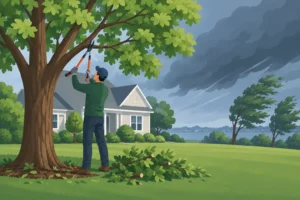
Arrange an inspection after a significant storm if a tree is near your house, driveway, utility area, fence, or outdoor living space. Pay particular attention to trees that have lost limbs, developed a new lean, or have branches hanging loosely in the canopy. Do not stand beneath damaged limbs or attempt to cut high branches yourself. What appears manageable from the ground can involve hidden tension and unpredictable failure.
Storm inspections are also worthwhile after extended wet periods. Saturated ground can reduce root holding strength, particularly for trees with shallow root systems, compromised roots, or poor drainage. A leaning tree that has always grown at a slight angle may be stable, while a new lean paired with cracked soil or raised roots deserves prompt professional assessment.
Changes That Call for a Tree Inspection
Trees communicate stress through changes in their leaves, bark, growth, and structure. Some changes are harmless or seasonal, but patterns and timing matter. A professional diagnosis can prevent unnecessary treatments while identifying issues that should not be ignored.
Schedule an inspection when you notice canopy thinning, dead branches, leaves browning outside their normal fall color change, unusually small leaves, or early leaf drop. These symptoms can be associated with drought stress, root damage, nutrient issues, fungal disease, insect feeding, or other site-related problems. The tree’s species and recent weather conditions help determine what the symptoms mean.
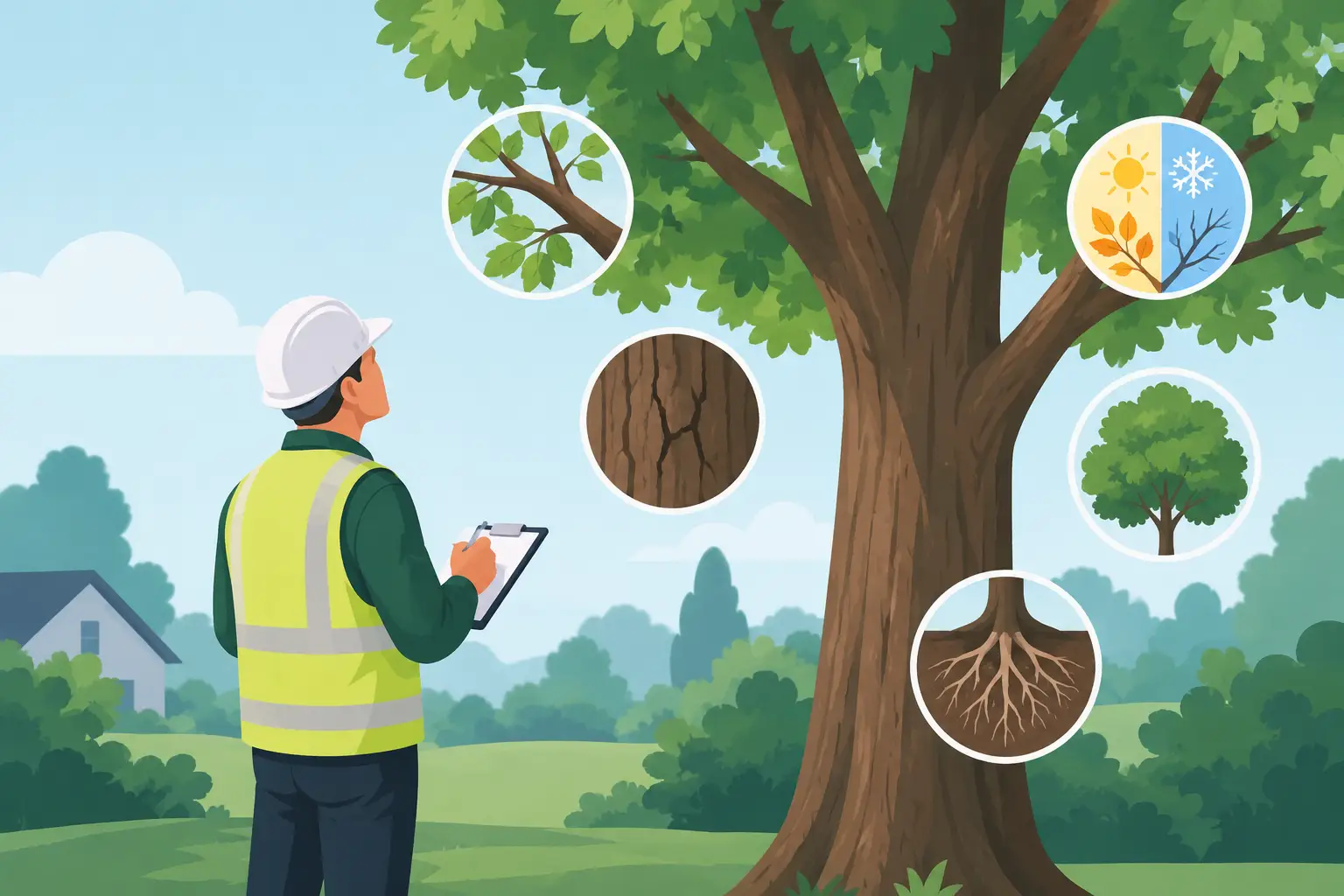
Look closely at the trunk and base of the tree as well. Mushrooms or fungal growth around the root flare, peeling bark, new cavities, oozing areas, deep cracks, and areas of soft or decaying wood all warrant a closer look. Fungi do not always mean a tree will fail, but they can signal internal decay that affects structural strength.
A sudden increase in deadwood is another reason to call. It is normal for trees to shed small twigs and occasionally lose a minor branch. Repeated branch dieback, however, may point to a health problem or a structural issue that should be evaluated before pruning alone is recommended.
Inspect Before Pruning, Construction, or Major Landscape Work
Pruning decisions should begin with an inspection, particularly for mature trees. The goal is not simply to remove every dead or low branch. Proper pruning considers the tree’s structure, growth habit, health, and relationship to the surrounding property. Over-pruning can create stress, stimulate weak growth, and reduce a tree’s ability to produce energy.
An inspection is especially valuable before installing a patio, pool, driveway addition, drainage system, retaining wall, or new utility line. Tree roots often extend well beyond the visible canopy. Excavation, grade changes, soil compaction, and altered drainage can damage roots and lead to decline months or even years later.
If construction is planned near a valuable tree, involve a tree professional early. Protective measures are generally more effective before equipment enters the site than after roots have been cut or soil has been compacted. A pre-work assessment can help preserve trees that contribute shade, privacy, and long-term property value.
Newly Purchased Homes and Mature Landscapes Need a Baseline
A home inspection focuses on the house, not necessarily the condition of every tree on the property. For homes with mature trees, a separate tree inspection is a worthwhile first step after purchase. It establishes a baseline and identifies immediate priorities, such as hazardous limbs, overdue pruning, pest concerns, or trees affected by past construction.
This is particularly helpful when a landscape has been maintained unevenly over the years. Dense canopies may hide deadwood, old pruning wounds, crowded limbs, or vines that conceal structural defects. An arborist can recommend a sensible order of work based on risk, tree health, and the homeowner’s goals rather than treating every tree the same way.
What Happens During a Professional Tree Inspection?
A thorough inspection usually begins from the ground. The arborist evaluates the site, tree species, canopy condition, branch attachments, trunk, root flare, soil conditions, and nearby targets such as structures or pedestrian areas. The findings guide recommendations for monitoring, pruning, plant health care, cabling, removal, or further assessment.
Not every concern requires immediate removal. In many cases, selective pruning, deep root feeding, pest management, or improved site care can support a tree’s health and reduce risk. In other cases, a tree may have severe decay, unstable structure, or root failure that makes removal the responsible option. The right recommendation depends on evidence, not appearance alone.
For Fairfield homeowners, O Care LLC provides tree diagnostics and arboricultural services with attention to both safety and long-term landscape health. The objective is clear guidance: understand what is happening, address the most urgent needs first, and make informed decisions for the seasons ahead.
Do Not Wait for a Tree Emergency
Call promptly if a tree or large limb has shifted toward a home, is touching a structure or utility line, has a fresh major crack, or has roots lifting from the ground. Keep people and pets away from the area until it can be evaluated. If electrical lines are involved, contact the utility provider and do not approach the tree or attempt removal.
A healthy-looking tree can still have hidden weaknesses, while a tree with a few cosmetic flaws may remain stable for years. Regular inspections replace guesswork with informed care. Scheduling one before the next major storm, construction project, or growing season gives your trees the attention they need while there is still time to make thoughtful choices.