A mature tree can look healthy from the street while its interior support wood is breaking down. Knowing the best signs of tree decay helps Fairfield homeowners spot a concern before wind, heavy rain, snow, or a falling limb turns it into a property hazard. Decay does not always mean a tree must be removed, but it does call for a qualified evaluation.
Many older trees provide welcome shade, seasonal color, and real value to a residential landscape. They also deserve closer attention as they age. Connecticut’s wet springs, summer storms, freeze-thaw cycles, and dense suburban planting conditions can expose weaknesses that are easy to miss during normal yard work.
Best Signs of Tree Decay Around Your Property
Mushrooms or fungal growth at the base
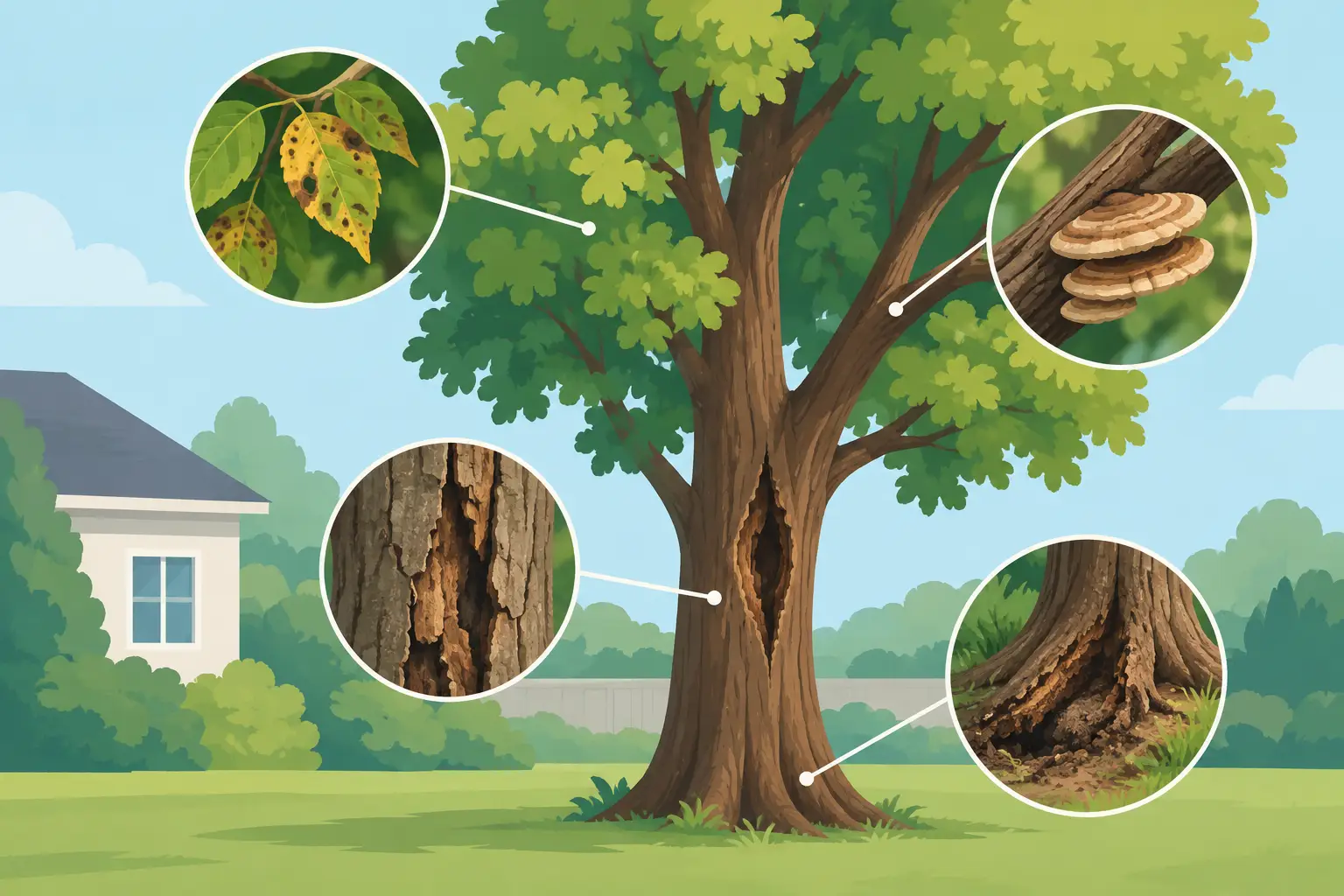
Mushrooms, shelf-like fungi, or other growth on a trunk, root flare, or stump are among the clearest signs that decay may be present. Fungi feed on wood, and visible fruiting bodies can indicate that an internal decay process has been underway for some time.
Not every mushroom near a tree means the tree is failing. Fungi can also grow from buried roots, old mulch, or decomposing wood in the soil. However, a bracket or conk attached directly to the trunk deserves professional attention, especially on a large tree near a driveway, patio, play area, roof, or power line.
Cavities, hollow areas, and loose bark
A hollow opening in a trunk does not automatically make a tree dangerous. Some trees can continue living with a cavity for years because the living tissue sits just beneath the bark. The concern is how much sound wood remains around that opening and whether the decay affects a major structural area.
Look for deep cavities, soft or crumbling wood, bark that is pulling away in large sections, or a trunk that sounds hollow when tapped lightly. Avoid inserting tools into a cavity or removing loose material. That can damage healthy tissue and will not tell you how far decay extends. An arborist can assess the location, extent, and effect of decay without causing additional harm.
Cracks, seams, or splits in the trunk
Vertical cracks and seams can develop after storm stress, rapid temperature changes, or years of uneven loading from heavy limbs. A small surface crack may be limited to bark. A deep crack that extends into the wood, widens over time, or appears where two main stems meet can indicate a more serious structural issue.
Pay particular attention to trees with multiple trunks joined in a narrow V-shaped union. These unions sometimes contain included bark, which prevents the stems from forming a strong connection. When decay is present at that point, the risk of splitting rises considerably during high winds or heavy snow.
Dead branches in an otherwise full canopy
A few small dead twigs are normal, particularly inside a dense canopy. Larger dead limbs, repeated branch dieback, or a thinning crown are different. They may point to root problems, disease, insect injury, drought stress, or decay affecting the tree’s ability to move water and nutrients.
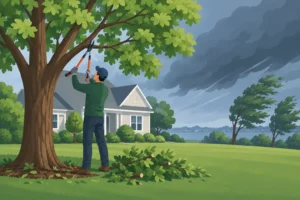
Dead branches are hazardous even when the trunk appears sound. They can drop without warning, especially after a storm or during winter. If you see bare limbs that do not leaf out while the rest of the tree is in leaf, schedule pruning or an inspection before they hang over vehicles, walkways, decks, or neighboring property.
A new lean or lifting soil around the roots
Trees often grow with a natural lean, and a long-standing lean is not necessarily a problem. A lean that appears suddenly, becomes more pronounced, or is paired with cracked soil and lifted roots is more concerning. These signs can indicate root failure, saturated soil, soil compaction, or damage from construction activity.
Check the ground after periods of rain and wind. Fresh soil mounding on one side of the tree, exposed roots, or a gap opening between the trunk base and soil may signal that the root system is shifting. Treat a newly leaning tree as an urgent concern, particularly if it is within striking distance of a home or occupied outdoor area.
Peeling bark and wounds that do not close
Healthy trees can recover from minor bark injuries. Over time, the tree grows callus tissue around the wound. When bark continues to peel away, a wound grows larger, or the exposed wood becomes soft and discolored, decay organisms may have entered the tree.
Common causes include lawn equipment strikes, deer rubbing, storm damage, and improper pruning cuts. Avoid wrapping the trunk or applying wound paint unless specifically recommended by a tree professional. The better approach is to protect the remaining bark, correct the underlying stress where possible, and monitor the area for change.
Excessive sprouts on the trunk or at the base
New shoots growing from the lower trunk, major limbs, or base of a tree can be a stress response. These sprouts are the tree’s attempt to produce more foliage when its normal canopy or internal transport system is compromised. They do not prove decay on their own, but they are worth evaluating alongside dieback, cavities, or damaged roots.
A sudden increase in sprouts after a hard pruning, drought, insect problem, or construction project can provide useful clues about what the tree has experienced. Removing the sprouts may improve appearance, but it will not address the cause of stress.
Decay Is Not Always Visible From the Outside
The most consequential decay is often hidden inside trunks, branch unions, and roots. A tree may retain green leaves and still have a reduced ability to support a large limb. Conversely, a tree with a visible cavity may have enough healthy wood to remain stable with monitoring and selective pruning.
That is why tree-decay decisions should not be based on one symptom alone. Tree species, size, age, location, root condition, lean, canopy weight, and the potential target below all matter. A small decaying ornamental tree in an open corner of the yard presents a different level of concern than a large declining oak over a family patio.
When to Call for a Professional Tree Inspection
A prompt inspection is advisable when a tree has a new lean, a large cracked limb, trunk splitting, visible fungal conks, major deadwood, or exposed and shifting roots. If a branch or tree is touching a utility line, keep people away and contact the utility provider. Do not attempt to prune or remove it yourself.
For less urgent concerns, a professional assessment can clarify whether the right next step is pruning, cabling, monitoring, soil and root care, pest or disease treatment, or removal. Cabling can sometimes provide supplemental support for a structurally weak union, but it cannot restore wood that has already decayed. Similarly, fertilization and deep root feeding can support a stressed tree when appropriate, but they are not a cure for advanced structural decline.
An arborist should inspect the entire tree, not just the most visible symptom. That includes the trunk flare, root zone, branch structure, canopy condition, nearby drainage, and any targets that could be affected if a limb fails. O Care LLC provides tree diagnostics and arboricultural services designed to give homeowners a clear recommendation based on the tree’s condition and its place in the landscape.
What Homeowners Can Do While Waiting for an Evaluation
Keep people, pets, cars, and outdoor furniture away from the area beneath a suspect tree or limb. Take clear photographs from several angles, including the trunk base and canopy, so you can track changes or share them during an inspection. After storms, walk the property from a safe distance and look for fresh cracks, fallen limbs, or soil movement.
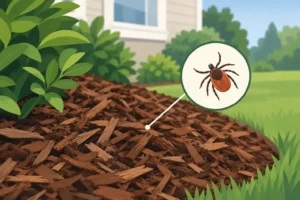
Avoid piling mulch against the trunk, cutting major roots, or topping the tree to reduce its height. Excess mulch can hold moisture against the bark, root cutting can destabilize the tree, and topping creates weak new growth while adding stress. Proper pruning, done with the tree’s natural structure in mind, is a far safer method for reducing selected limb weight.
A healthy landscape is easier to protect when changes are noticed early. If a tree’s shape, bark, canopy, or root area suddenly looks different, trust that observation and have it assessed before the next storm puts that concern to the test.