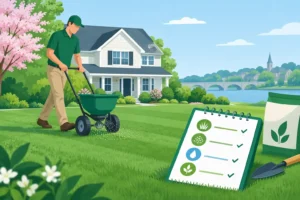
A Fairfield lawn can look fine in April and struggle by July. Heavy foot traffic, compacted soil, summer heat, grubs, weeds, and shade from mature trees all place different demands on turf. That is why the choice between organic versus conventional lawn treatments should begin with your property’s conditions, not a one-size-fits-all preference.
Both approaches can support a greener, healthier lawn when they are properly designed and professionally applied. The difference is in how they feed turf, manage weeds and insects, and build long-term soil health. For many homeowners, the best decision comes down to priorities: speed of visible results, pest pressure, family and pet use, environmental goals, and the current condition of the lawn.
Organic versus conventional lawn treatments: the core difference
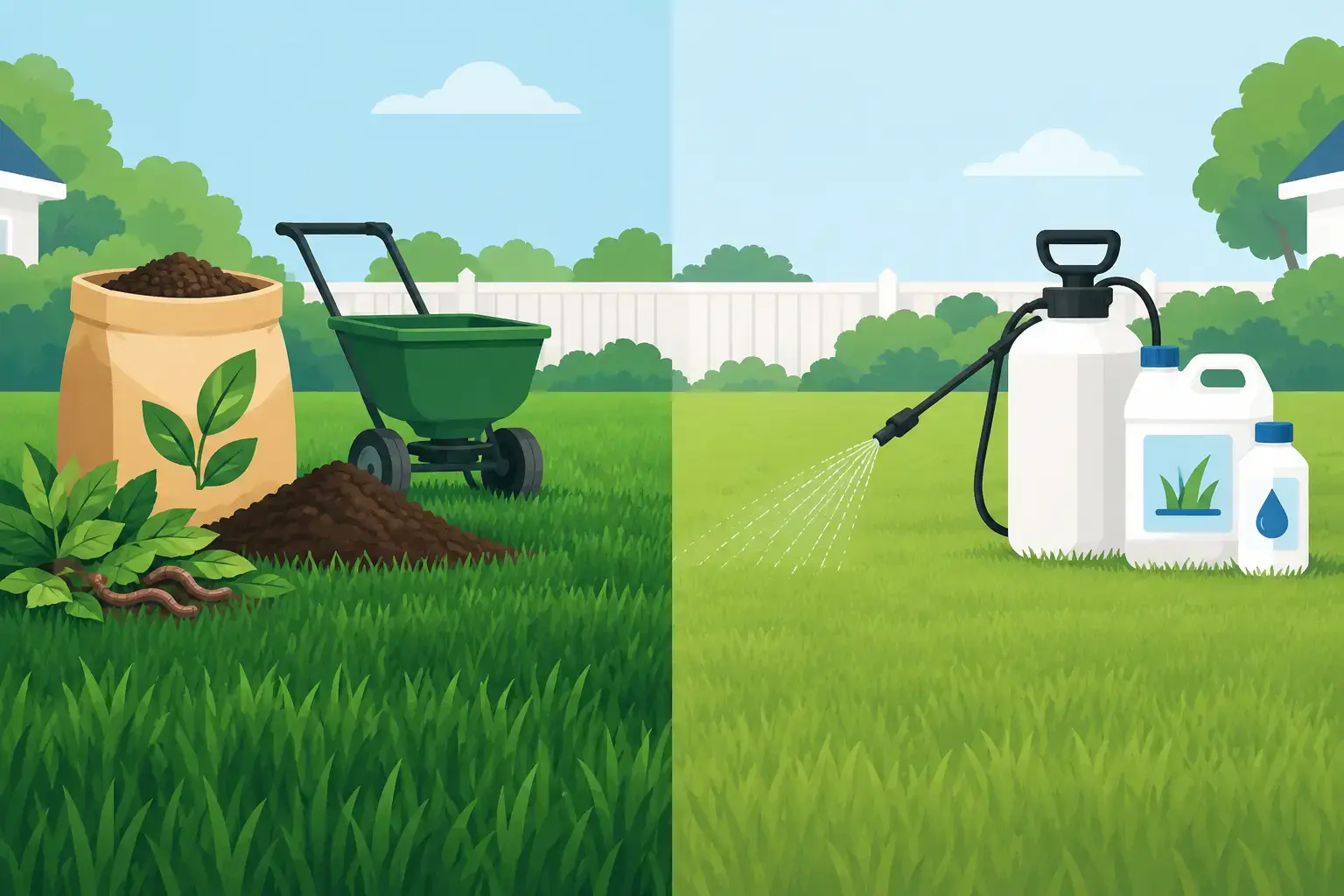
Organic lawn programs rely on naturally derived materials and practices that improve the biological activity and structure of the soil. Organic fertilizers commonly feed turf more gradually, encouraging a stronger root system rather than forcing a quick flush of top growth. Compost-based materials, natural soil amendments, aeration, overseeding, and good mowing habits are often central to the program.
Conventional lawn programs use carefully selected synthetic fertilizers and targeted control products to deliver nutrients and address specific weeds, grubs, or turf diseases. These treatments can produce more immediate, predictable results, particularly when a lawn has significant weed competition, insect damage, or nutrient deficiencies.
Neither option is simply “good” or “bad.” The right program depends on what the lawn needs and what you expect from it. A thin lawn with widespread weeds has different requirements than an established lawn where the homeowner wants to focus on soil improvement and a lighter-input approach.
What organic lawn care does well
Organic treatment is especially well suited to homeowners who want to strengthen their lawn from the soil up. Healthy soil holds moisture more effectively, supports beneficial microbial activity, and gives grass roots a better environment to grow. Over time, this can improve turf resilience during dry periods and reduce the need for corrective treatments.
An organic program is often a strong fit for families who spend a great deal of time outdoors, homeowners who prioritize environmentally conscious property care, and landscapes near sensitive planting beds, water features, or mature trees. It also pairs naturally with cultural practices that make a major difference in Fairfield County lawns: mowing at the proper height, watering deeply rather than frequently, relieving compaction through aeration, and reseeding thin areas in the fall.
The trade-off is patience. Organic fertilizers generally release nutrients at a slower pace, so the lawn may not respond as quickly as it would with a conventional fertilizer application. Organic weed management also tends to be more limited once weeds are established. A thick lawn remains the best weed defense, but building that density may require more than one growing season.
Organic programs work best as a long-term plan
A healthy organic lawn is not created by a single application. It is built through consistent seasonal care and realistic expectations. If soil is compacted, turf is thin, and weeds already occupy large areas, the first year may focus on improving growing conditions rather than delivering an instant uniform appearance.
This approach is worthwhile for homeowners prepared to invest in the foundation of the lawn. It can be particularly effective when paired with annual core aeration and overseeding, which introduce new grass plants and help nutrients, air, and water reach the root zone.
Where conventional treatments offer an advantage
Conventional lawn treatments provide efficient tools for common turf problems that need timely control. Selective weed control can address broadleaf weeds without treating the entire landscape indiscriminately. Preventive grub control can protect turf roots before feeding damage becomes visible. Fertilizer applications can also correct nutrient needs with a level of precision that helps lawns recover from stress.
For busy homeowners who want reliable seasonal consistency and a polished lawn appearance, a conventional program can be the practical choice. It is often appropriate when the property has a history of grub damage, persistent weed pressure, or turf that needs faster improvement after drought, heavy use, or neglect.
Professional application matters here. Treatments should be selected according to the lawn’s condition, applied at the correct time of year, and used only where they provide a clear benefit. A responsible conventional program is not about applying more product. It is about diagnosing the problem accurately and using targeted treatments that protect the lawn while avoiding unnecessary inputs.
Timing is part of the treatment
A conventional product can be highly effective when it is applied at the proper life stage of the pest or weed. Applied at the wrong time, even a quality treatment may offer limited value. Grub prevention, for example, is different from treating active grub damage later in the season. Similarly, weeds are easier to manage when they are young and actively growing than when they have matured and spread seed.
This is one reason professional monitoring is valuable. Your lawn’s needs in a cool, wet spring may look very different from those in a hot, dry summer.
Weed, grub, and insect control: where choices become more specific
Homeowners often compare organic and conventional programs because they want fewer weeds and less insect damage. The practical answer is that organic and conventional options do not always offer equal control for every issue.
For weed prevention, a dense, well-fed lawn is essential under either approach. Organic care supports density through better soil conditions and steady nutrition, but it may not eliminate established weeds as quickly. Conventional selective weed control is generally more effective when dandelions, clover, crabgrass, or other weeds have become a visible problem.
For grubs, the stakes are higher because damage can appear quickly. Grubs feed on grass roots, causing irregular brown patches that lift easily from the soil. They can also attract skunks, raccoons, and other animals that tear up turf while feeding. Conventional preventive grub control is typically the most dependable option where a property has recurring grub history. If a homeowner prefers an organic approach, the lawn should be inspected closely and expectations should be discussed before the season begins.
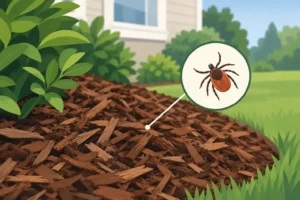
Tick control is another separate decision. Lawn fertility does not solve tick pressure around wooded edges, stone walls, leaf litter, and ornamental beds. Organic tick control options may fit homeowners looking to reduce exposure with an environmentally conscious approach, while property conditions and treatment timing remain central to results.
Soil, shade, and trees can change the recommendation
Fairfield properties often include mature oaks, maples, evergreens, and ornamental plantings that contribute to a beautiful landscape but complicate lawn care. Shade, tree-root competition, and leaf debris can thin turf even when fertilization is adequate. In those areas, adding more fertilizer alone will not solve the problem.
A qualified lawn care provider should look at the full site: sunlight, drainage, soil compaction, irrigation coverage, mowing practices, root competition, insect activity, and turf variety. Sometimes the best recommendation is an organic soil-building plan. Sometimes conventional weed or grub control is justified. In difficult areas, a blended strategy may provide the most responsible result.
For example, a homeowner may choose organic fertilization and soil conditioning as the foundation of the program, then use targeted conventional treatment only where a persistent weed or grub issue threatens the lawn. This approach avoids treating the choice as an all-or-nothing decision.
How to choose the right program for your property
Start with the lawn you have now, not the lawn you hope to have by next weekend. Consider whether your biggest concern is thin turf, weeds, grubs, poor soil, pet and family use, drought stress, or the appearance of the property for the season ahead.
Organic care may be the better fit if your priority is gradual soil improvement, reduced reliance on synthetic inputs, and a long-term approach to turf health. Conventional care may be better if you need more immediate weed or grub control, have a lawn with a known pest history, or want a highly predictable seasonal treatment schedule.
A site-specific assessment is the most dependable way to decide. O Care LLC evaluates turf conditions alongside tree, shrub, soil, and pest factors so homeowners can choose a treatment plan based on real landscape needs rather than broad assumptions.
The goal is not to choose a label. It is to maintain a lawn that is healthy enough to resist stress, attractive enough to enjoy, and managed with care for the people, pets, trees, and planting beds that share the property. A professional evaluation before the next treatment cycle can turn a general preference into a plan that works for your yard.