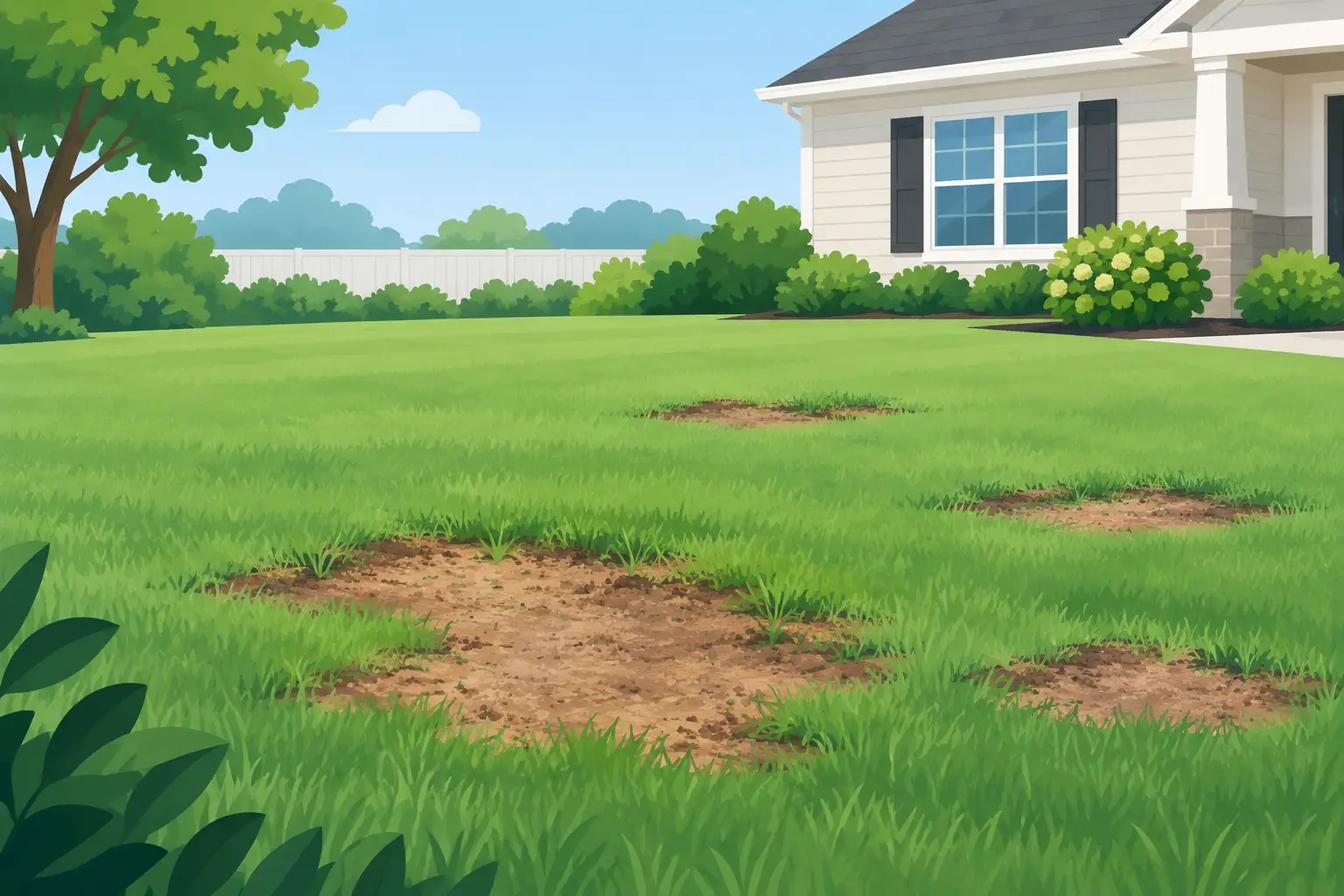
A thin patch beside the driveway, a widening circle beneath a mature maple, or turf that peels back like loose carpet can make an otherwise well-kept property look neglected fast. Homeowners often ask what causes bare lawn spots, but the useful answer is rarely just “lack of grass seed.” Bare areas are usually evidence of a problem below the surface, in the growing conditions, or in how the lawn is being used.
In Fairfield County, cool-season lawns face particular pressure from humid summers, heavy shade from established trees, compacted soils, deer and pet activity, and insect damage. Identifying the actual cause before reseeding gives new grass a far better chance of taking hold and staying healthy.
What Causes Bare Lawn Spots in Connecticut Lawns?
A bare spot can result from one problem or several working together. For example, a shaded area may already have weak turf. Compaction limits root growth, summer stress thins the grass further, and weeds or moss move in before the lawn can recover. A proper diagnosis looks at the turf, soil, drainage, nearby trees, and seasonal timing rather than treating every patch the same way.
Grub damage and other lawn insects
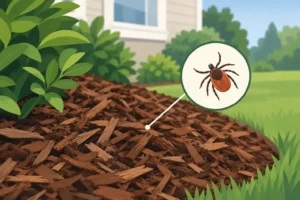
White grubs are among the most common causes of sudden, irregular bare areas. These are the larvae of certain beetles, and they feed on grass roots below ground. As roots disappear, the turf loses its anchor and may lift easily when pulled, much like a section of sod with no roots holding it in place.
Grub damage often becomes visible from late summer into early fall, especially when the lawn is also dry or heat-stressed. Skunks, raccoons, and crows may tear at the turf while searching for grubs, adding obvious surface damage to an already weakened lawn.
Not every brown patch is a grub problem. Treating for insects without confirming their presence can add unnecessary product to the landscape and delay the real repair. A professional inspection can determine whether grub populations have reached a level that warrants control and whether preventive treatment is appropriate for the property.
Compacted soil and poor root development
Many Fairfield properties have compacted soil, particularly along driveways, walkways, play areas, and places where equipment or repeated foot traffic crosses the lawn. Compaction squeezes out the pore spaces that roots need for air, water, and nutrient movement. Grass may remain thin, shallow-rooted, and vulnerable to drought even when it receives regular fertilization.
If water puddles after rain, runs off instead of soaking in, or the soil feels hard and dense when dry, compaction may be contributing to bare spots. Core aeration relieves compaction by removing small plugs of soil. It is most effective when paired with the right follow-up care, such as overseeding and appropriate fertility, rather than used as a one-size-fits-all fix.
Heavy clay soils may need additional attention to improve drainage and support root activity. On the other hand, sandy areas can dry quickly and may need a different watering and nutrient strategy. The soil conditions matter as much as the visible symptoms.
Shade from trees and structures
A dense lawn and deep shade are often competing goals. Cool-season turf needs several hours of usable light to maintain the energy reserves that support growth and recovery. Under mature oaks, maples, and evergreens, grass competes with tree roots for moisture and nutrients while receiving less light. The result is often thin turf, moss, exposed soil, or recurring bare spots.
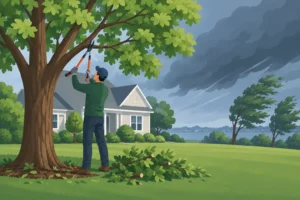
Pruning can sometimes improve filtered light and air circulation, but responsible tree care should never remove more canopy than is healthy for the tree. In heavily shaded locations, the practical solution may be to use a shade-tolerant grass mix, adjust irrigation, reduce traffic, or reconsider whether lawn is the best long-term ground cover for that area.
This is especially true around large, established trees. Protecting tree roots and maintaining tree health should take priority over forcing turf to grow where conditions consistently work against it.
Fungal disease and summer stress
Connecticut’s hot, humid weather can create favorable conditions for turf disease. Brown patch, dollar spot, and other fungal issues can leave circular or irregular areas of damaged grass. Disease is more likely when nights stay warm, humidity is high, turf is overfertilized, or the lawn stays wet for extended periods.
The appearance of a disease patch can overlap with drought stress or insect damage, which is why close inspection is valuable. Some diseases create distinct rings, leaf spots, or discolored blades before a patch thins out. Others show up where watering is uneven or air circulation is poor.
Watering habits can make a meaningful difference. Deep, infrequent morning watering generally supports stronger roots and gives grass blades time to dry. Frequent light watering, especially in the evening, can keep the lawn surface damp and encourage disease. Mowing with a sharp blade and avoiding excessively short mowing also reduces stress on the turf.
Dog urine, traffic, and mechanical injury
Pet urine can create small, sharply defined brown or bare areas, often surrounded by a darker green ring. The issue is usually concentrated nitrogen and salts, not the acidity of the urine. Promptly watering the area after a dog urinates can dilute the concentration, although it is not always practical on a busy household schedule.
Foot traffic, children’s play equipment, repeated turns from lawn equipment, and snowplow or shovel damage can also wear grass away. These areas may need a simple adjustment in use, such as moving a play path or changing mowing patterns, along with soil repair and reseeding.
Herbicide injury is another possibility. Drift from weed-control products, spills, or applying the wrong material at the wrong rate can damage desirable grass. If a patch appeared soon after a lawn treatment, share that timing during a lawn evaluation. Accurate history helps prevent repeated injury.
How to Tell Which Problem You Have
The pattern and timing of damage offer useful clues. A careful homeowner can begin with a few observations before deciding on a repair plan:
- Turf that lifts easily may indicate root feeding from grubs.
- Bare ground under dense tree canopy often points to insufficient light and root competition.
- Hard soil and recurring thinning in high-use areas suggest compaction.
- Small, repeat brown spots in a dog’s usual area may be urine damage.
- Patches that expand during warm, humid weather may involve disease or heat stress.
These clues are a starting point, not a substitute for diagnosis. More than one condition may be present, and the visible bare area may be the final symptom rather than the original problem.
Repairing Bare Spots Without Repeating the Problem
The best repair sequence is to correct the cause first, then rebuild the turf. Seeding directly into compacted soil, active grub damage, deep shade, or poor drainage often produces a short-lived improvement. New seedlings cannot solve the conditions that weakened the original lawn.
For small areas, remove dead material, loosen the soil surface, add suitable seed, and keep the seedbed consistently moist until germination. Fall is generally the best time to seed cool-season lawns in Fairfield because soil remains warm while air temperatures become less stressful. Early fall also gives grass time to develop roots before the following summer.
Larger or recurring areas may require aeration, overseeding, targeted insect control, soil improvement, or adjustments to irrigation and mowing. Where shade is the primary issue, a shade-specific turf blend may help, but even the best seed has limits. A sustainable landscape plan may include beds, mulch, or shade-tolerant plantings where grass cannot receive enough light.
Fertilizer can support recovery when it is matched to the lawn’s needs and season. Applying more fertilizer than the turf can use may increase growth that is weak, disease-prone, or environmentally wasteful. Organic and conventional lawn care programs can both be effective when they are selected based on soil conditions, turf goals, pest pressure, and the homeowner’s preferences.
When a Lawn Inspection Is Worth It
A professional evaluation is especially helpful when bare spots return in the same locations, spread quickly, appear across multiple parts of the property, or occur near valuable trees and ornamental beds. Lawn health is connected to the rest of the landscape. Drainage patterns, tree canopy, root competition, insects, and cultural practices all influence what happens at ground level.
At O Care, lawn and plant health expertise can help homeowners identify the cause before investing in treatments or reseeding that may not last. A tailored plan can address the immediate damage while improving the conditions that support a fuller, more resilient lawn season after season.
A bare spot is not a failure of your lawn. It is useful information – and once the underlying cause is addressed, that information can lead to healthier turf and a more dependable landscape.