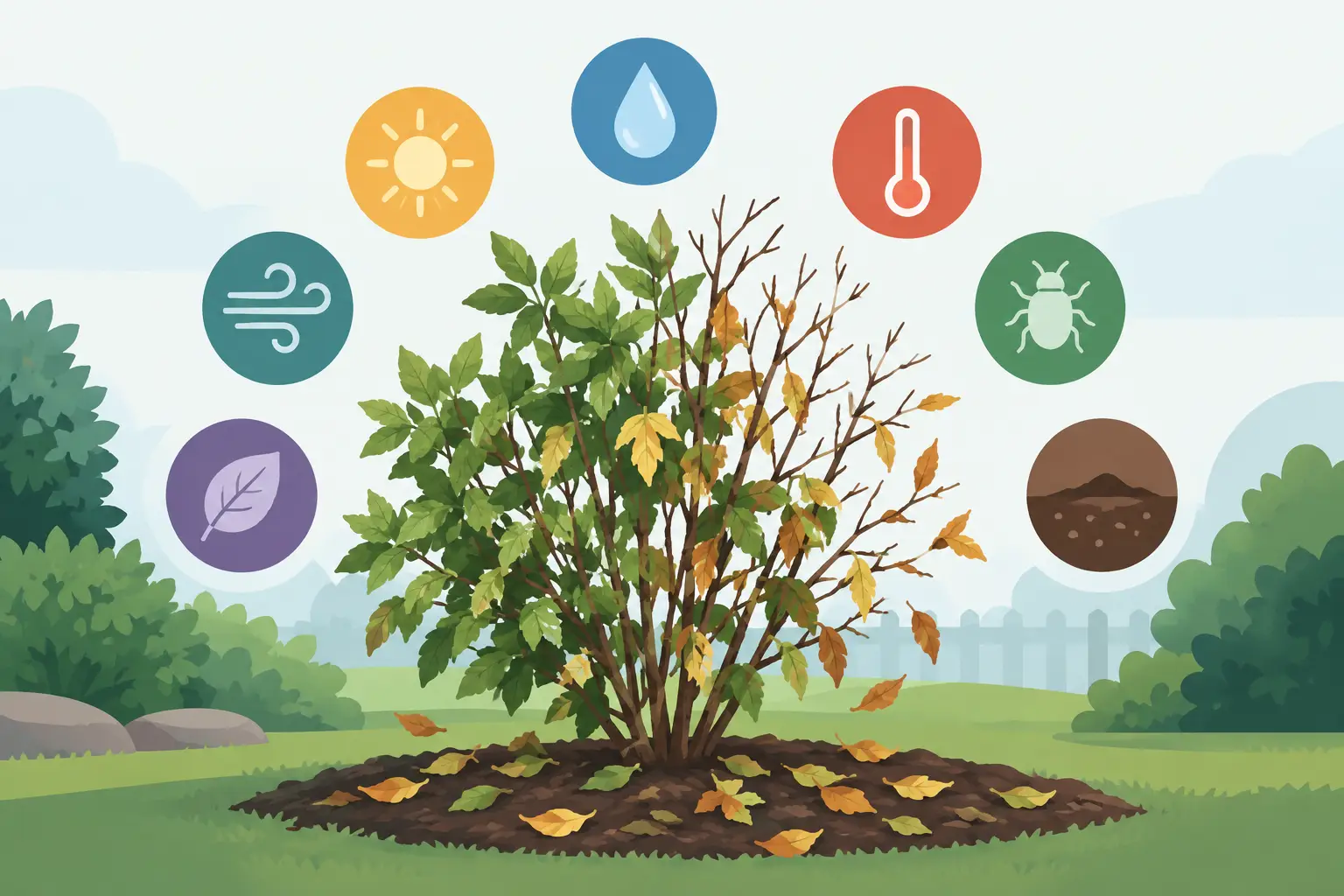
A hedge that looked full and healthy in June can look surprisingly thin by late summer. When leaves begin dropping from an evergreen rhododendron, boxwood, holly, or arborvitae, homeowners naturally ask: why are shrubs losing leaves? The answer is not always a single problem. In Fairfield landscapes, leaf loss can result from normal seasonal change, weather stress, planting conditions, insects, disease, or root damage.
The timing, pattern, and type of shrub matter. A few older leaves shedding from the interior may be normal. Widespread browning, bare branches, or leaf loss concentrated on one side of the plant usually calls for a closer look.
Start by ruling out normal leaf drop
Not every fallen leaf indicates a declining shrub. Deciduous shrubs, including hydrangeas, summersweet, viburnums, and many flowering spireas, are meant to lose their leaves in autumn. Their foliage may turn yellow, bronze, red, or purple first, then drop evenly as temperatures cool.
Evergreen shrubs also replace older foliage. Broadleaf evergreens such as rhododendron, mountain laurel, azalea, holly, and boxwood may shed their oldest interior leaves in late summer or fall. Conifers such as arborvitae and yew can also drop older needles closer to the trunk. This natural shedding is usually limited to older growth, while branch tips remain green and healthy.
The concern begins when new outer leaves are falling, entire branches are thinning, or foliage develops spots, scorch, chewing damage, or an unusual yellow color before dropping.
Weather stress can cause sudden shrub leaf loss
Connecticut shrubs manage a wide range of weather conditions, from winter wind and frozen soil to humid summer heat and heavy rain. A stressful stretch of weather can show up as leaf drop weeks later.
Drought and inconsistent watering
Shrubs need consistent moisture, especially during their first two to three years after planting. In established landscapes, mature shrubs can still become stressed when dry conditions persist or when competing tree roots pull available moisture from the soil.
Drought-stressed shrubs may wilt, curl, turn dull green or grayish, and shed leaves to conserve water. Quick, shallow watering often does not correct the issue because it encourages roots to stay near the surface. A slow, deep soaking that moistens the root zone is more effective, followed by a layer of mulch to help retain moisture.
Too much water can produce similar symptoms. Saturated soil pushes air out of the root zone, leaving roots unable to function properly. Yellowing leaves, leaf drop, and weak growth after repeated heavy rain may point to poor drainage rather than a lack of water.
Winter injury and late freezes
Broadleaf evergreens are particularly vulnerable to winter burn. Drying winds, reflected heat, road salt, and frozen soil can cause leaves to lose moisture faster than roots can replace it. Damage often becomes obvious in spring, when leaves brown at the edges or branches fail to leaf out evenly.
A late spring freeze can also injure tender new growth. If leaf loss follows a cold snap, inspect buds and stems before pruning. Some shrubs will produce replacement growth once temperatures stabilize, while dead wood should be removed after the extent of damage is clear.
Why shrubs lose leaves after planting or construction
A shrub may look fine when it is installed, then decline later in the season. Transplant shock is common because much of the fine root system is disturbed during digging, handling, and planting. The roots need time to establish before they can support full foliage growth.
Planting depth is another frequent issue. A shrub set too deeply may struggle because the root flare is buried and the roots receive limited oxygen. Heavy mulch piled against stems can create a similar problem, trapping excess moisture and encouraging bark decay.
Landscape changes can affect older shrubs as well. New patios, grading work, trenching, compacted soil, or changes to downspout drainage can damage roots or alter how water moves through the bed. Mature shrubs often decline gradually after these disruptions, rather than immediately.
Insects and disease leave recognizable clues
When homeowners ask why are shrubs losing leaves, a careful inspection for pests and disease is essential. Treatment should match the actual cause. Applying a general product without a diagnosis can waste time and may not protect the plant.
Spider mites are common during hot, dry weather and can affect boxwood, arborvitae, spruce, and other ornamentals. They cause fine stippling, bronzing, and eventual leaf or needle drop. A close look may reveal tiny moving specks or delicate webbing.
Scale insects can weaken hollies, euonymus, magnolia, and other shrubs by feeding on plant sap. Look for small raised bumps along stems or leaf undersides, sticky residue on foliage, or black sooty mold growing on that residue.
Leaf spot diseases are often encouraged by wet foliage, poor air circulation, and prolonged humidity. Affected leaves may develop brown, purple, tan, or black spots before yellowing and dropping. Powdery mildew creates a white coating, while some fungal diseases cause more complete defoliation over time.
Boxwood deserves particular attention in Fairfield-area landscapes. Leaf drop, bronzing, and bare stems can be related to winter injury, mite activity, root stress, or diseases that require different responses. Because symptoms can overlap, professional diagnosis is valuable before pruning aggressively or choosing a treatment.
Deer, salt, and herbicide exposure can mimic disease
Not all foliage damage comes from pests. Deer browsing typically leaves cleanly clipped twigs and missing growth at the height deer can reach. Repeated browsing can thin shrubs year after year and prevent them from developing a full shape.
Salt exposure is another local concern, particularly for shrubs near driveways and roads. Salt spray and salty runoff can scorch leaf edges, cause dieback on the side facing pavement, and damage roots. The pattern is often worse in late winter or early spring.
Herbicide drift can distort, curl, yellow, or drop leaves. This can happen when weed-control products are used in windy conditions or applied too close to desirable plantings. If symptoms appear soon after a lawn or bed treatment, document the pattern and avoid making additional applications until the cause is identified.
What to do when your shrubs are dropping leaves
Begin with observation rather than immediate pruning. Check whether the loss is limited to older interior leaves or affecting new growth. Look at both sides of the foliage, inspect stems for pests or cracks, and feel the soil several inches below the surface. Soil that is bone dry and soil that stays muddy can both signal trouble.
Give stressed shrubs steady care. Water deeply when the root zone is dry, but do not keep soil constantly wet. Maintain a 2- to 3-inch layer of mulch, keeping it several inches away from trunks and stems. Remove fallen diseased leaves from the bed, and avoid overhead watering when leaf-spot disease is suspected.
Hold off on heavy fertilization unless a diagnosis confirms a nutrient need. Fertilizer cannot repair failing roots, and forcing tender growth on a stressed shrub may make the problem worse. Similarly, avoid removing large portions of a shrub until you know which branches are truly dead. Scratch a small section of questionable stem bark with a clean tool. Green tissue beneath the bark indicates living wood.
When a professional inspection makes sense
An evaluation is worthwhile when leaf loss is widespread, returns each year, affects several shrubs, or is accompanied by branch dieback. It is especially helpful for mature specimen shrubs, screening hedges, and evergreens that are costly to replace.
A qualified plant health care professional can assess soil moisture, drainage, root condition, insects, disease symptoms, and environmental factors together. That full picture helps determine whether the right approach is improved watering, pruning, targeted pest management, deep root feeding, deer protection, or replacement with a better-suited plant.
Healthy shrubs rarely need complicated care, but they do need the right care for their site and season. If leaf loss is changing the appearance of your landscape, early attention can often protect the plant, preserve its shape, and help your property look cared for through every season.